


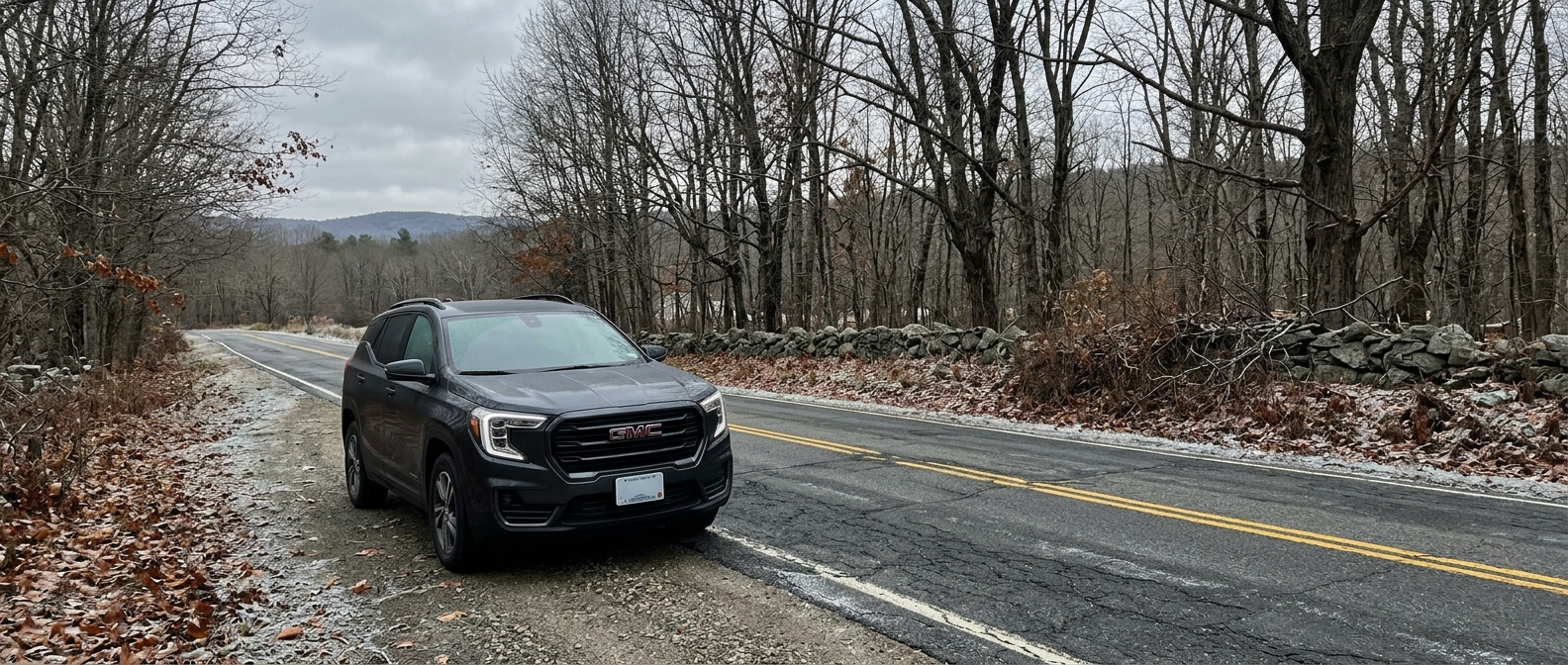
Snow in Keene doesn't wait for December to make up its mind. The snowy period here runs nearly six months, and it opens around October 28. We're nine days out from that date today. Your battery and your tires cause the most winter trouble, and both start to degrade as temperatures fall toward freezing, well before the first accumulating storm. Prep them now, while the work is easy, and November becomes a non-event.
The 2026 GMC Terrain AWD is built to handle what Route 9 and Route 12 throw at it in January. No vehicle, AWD or otherwise, makes up for a weak battery or a tire that's lost its grip, though. Our checklist here covers both, plus the five other systems that matter before the Monadnock Region's winter clock starts ticking.
What Goes on the Checklist?
Work through these seven items in October, before the road salt starts flying and before the service bays fill up in November, and you'll clear winter prep while it's still cheap and quick. Each one takes between five minutes and an hour. None of them asks you to guess.
1. Battery load test Get it tested under actual load rather than a simple voltage reading. A car battery loses up to 35% of its starting power when the mercury drops below freezing, while your engine simultaneously demands up to 50% more current to crank. That double squeeze is what kills marginal batteries on a cold January morning. If your battery is four years old or older, replace it now. You'll have zero regrets.
2. Tire tread depth (all four, including the spare) NHTSA says tires should be replaced when tread depth reaches 2/32 of an inch. For winter conditions, AAA recommends at least 4/32 of an inch for improved performance in snow and wet conditions. The quarter-test (Lincoln's head disappears = roughly 4/32") works fine for a driveway check and doesn't need special tools.
3. Tire pressure Tire pressure drops roughly 1 psi for every 10 degrees F drop in temperature, so a tire that reads fine in October is often low by December, and you won't notice until you check. Set it to the spec on your driver-side door jamb label rather than the max sidewall figure.
4. Coolant / antifreeze concentration The coolant mix in your reservoir needs to be strong enough for Keene's real lows. January average highs here sit around 31 degrees F, and average lows drop to around 9 degrees F. A weak mix can slush up and stop circulating. An inexpensive tester tells you exactly where you're starting from.
5. Wiper blades and washer fluid Summer-blend washer fluid freezes in the lines. Swap it for a winter-rated fluid before the first freezing rain. Replace blades that streak or skip, because glass that won't clear at highway speed on Route 9 is a real problem and a cheap one to avoid.
6. Brakes: pads, rotors, and hardware Salt brine seizes caliper hardware and packs in behind the brake pads, so the time to check is ahead of salt season rather than after it. If you hear scraping or feel the pedal going long, this one can't wait.
7. Under-hood fluids and belts Engine oil, power steering fluid, and brake fluid all have cold-weather behaviors worth knowing. Belts get brittle, and they'll crack when you least want it. A quick visual on a cold morning tells you more than a warm-day check.
Schedule your pre-winter service inspection before the November rush. It's the one appointment that costs the least when you make it early.
Why These Items Matter Most in the Monadnock Region
The driving around Keene isn't flat suburban commuting, and the grades out here are the reason this checklist leans on batteries, tires, and brakes instead of spreading evenly across everything under the hood. NH Route 12 rises and falls through Swanzey before it reaches Keene. Route 9 runs west toward Chesterfield on grades that load your drivetrain differently than a parking lot does. The systems that carry the most stress on those roads in winter are exactly the ones on this list.
Batteries and cold: the real mechanism. Cold temperatures slow the electrochemical reactions in the battery, raising internal resistance and reducing the current available for starting. At the same time, engine oil thickens in the cold and needs more cranking power to turn the engine over. A battery that starts fine on a 55-degree October afternoon can genuinely fail on a 5-degree January morning, not because anything broke, but because the chemistry runs out of room. A load test catches that gap, and it's a quick one to run.
Tires and grip: it's about temperature, not just tread. As temperatures fall, tire rubber can become less flexible, while rain, slush, and snow cut the traction you've got to work with. Dedicated winter tires grip noticeably better once temperatures stay below about 45 degrees F, which covers most of a New Hampshire winter, though healthy all-seasons with good tread will get many drivers through. The honest trade-off is straightforward. All-season tires are a practical choice for moderate winters, but if your commute includes unplowed side roads or the Swanzey hills on Route 12 before the plows have made a pass, a dedicated winter set changes the experience meaningfully. New Hampshire has no restrictions on studded snow tires, worth knowing if you're on dirt or unpaved roads into November.
AWD helps, but it starts with the tires. All-wheel drive sends power to the wheel that finds grip. The 2026 GMC Terrain is available with all-wheel drive, which helps provide added traction in certain road and weather conditions. What AWD can't do is create grip that isn't there. A bald tire on an AWD vehicle still slides. The Terrain with its 8-speed automatic and 203 lb-ft of torque on AWD trims works the way it's supposed to when the tires underneath it can hold the road.
Good to know: The 2026 GMC Terrain's AWD-equipped Elevation, AT4, and Denali trims pair the system with an 8-speed automatic transmission, which also enables Hill Descent Control for steep grades. The AT4 adds all-terrain tires from the factory, and that's a real head start on this checklist item for buyers on rural roads around Swanzey.
Owners of the Sierra 1500 should pay particular attention to the battery test. They're running plenty of accessories, and that draw compounds the cold-weather starting demand.
Book Your Pre-Winter Service Appointment
Item-by-Item: Why It Matters
Use this section as the quick reference version of everything above, whether you print it, photograph it, or just run down it in the bay before you pull out. Each row pairs a checklist item with the reason it's earned a spot before the first snowfall.
| Checklist Item | Why It Matters Before Keene's First Snowfall |
|---|---|
| Battery load test | Cold air cuts cranking power; a marginal battery that passes a voltage check can still fail at 0 degrees F |
| Tire tread (4/32" for snow) | Tread depth below 4/32" reduces stopping and cornering grip on wet or snowy pavement |
| Tire pressure to door-jamb spec | 1 psi lost per 10 degrees F drop; underinflated tires affect handling and wear unevenly in salt |
| Coolant concentration | A weak antifreeze mix can slush in Keene's January lows (average low around 9 degrees F) |
| Winter washer fluid + wiper blades | Summer fluid freezes in lines; streaking blades at highway speed reduce visibility |
| Brake inspection before salt season | Salt brine seizes caliper hardware; pre-season inspection catches it before it becomes structural |
| Belts and under-hood fluids | Cold stiffens rubber; a cracked belt in December is a far more expensive fix than a check in October |
Your Print-and-Go Recap
Run through this list before you call the service bay, checking off what you've handled and flagging what you haven't so the visit is quick and targeted. The items you can't confirm are the ones to bring us.
- [ ] Battery load-tested (not just voltage-checked); replace if 4+ years old
- [ ] All four tires at or above 4/32" tread depth
- [ ] Spare tire inflated to spec
- [ ] Tire pressure set to door-jamb label after a cold morning reading
- [ ] Coolant concentration verified for lows below 0 degrees F
- [ ] Winter-rated washer fluid installed
- [ ] Wiper blades replaced if streaking or skipping
- [ ] Brake pads, rotors, and caliper hardware inspected
- [ ] Engine oil at correct level; confirm viscosity is right for cold starts
- [ ] Belts and hoses visually checked
- [ ] Cabin air filter checked (reduced airflow means slower defrost)
- [ ] In-vehicle emergency kit: ice scraper, jumper cables or jump pack, warm layer
If you've checked all twelve, you're in good shape before the first storm. Bring the ones you're uncertain about to our service team and we'll go through them.
Keene's snowy season statistically opens around October 28. A battery load test and a tire tread check in the next two weeks cost far less than a tow in January.
Frequently Asked Questions
Does all-wheel drive make winter tires unnecessary in New Hampshire?
All-wheel drive and winter tires solve different problems, so one doesn't retire the other. AWD distributes power to the wheel that has grip, which helps with acceleration and pulling out of an unplowed driveway or off a soft shoulder on Route 12. Winter tires use a softer rubber compound that stays pliable below 45 degrees F and a tread pattern built to channel slush and bite into packed snow, so they improve braking and cornering that AWD can't directly affect. Our team's honest take is this. If your commute sticks to well-plowed state routes and you're running all-seasons with solid tread, AWD covers a lot of ground. If you're on rural roads in Swanzey or making a regular run on Route 9 before the morning plowing pass, a dedicated winter set on all four corners makes a real and noticeable difference in how the vehicle corners and stops.
When is the right time to schedule a winter service appointment in the Keene area?
When should you book it? October, really. Keene's snowy period statistically opens around October 28, and service bays get busy through November as drivers who waited start arriving together. Scheduling in October means you can address any issues, like a marginal battery or a brake inspection, before the first storm rather than during it. If you're also weighing a switch to a dedicated winter tire set, October gives enough lead time to order the right size and get them mounted before the temperature locks in below 45 degrees F, which is when the tread compound on a winter tire actually starts earning its keep over an all-season.
Categories:
Service